The Real Cost of Living in Kitchener-Waterloo (2026 Breakdown)
[kvcoreidx_search]
Cost of Living Kitchener Waterloo
Is Kitchener-Waterloo still the “affordable alternative” to Toronto?
For years, the story was simple: “Drive an hour west, save a million dollars.” But after the wild market swings of the early 2020s and the inflation that followed, the math has changed. In 2026, Kitchener-Waterloo (KW) isn’t just a bedroom community for commuters; it’s a booming tech and university hub with its own unique economy.
The good news? As we settle into 2026, the “fever” has broken. Rents have stabilized (and in some cases, dipped), and the housing market has entered a balanced territory we haven’t seen in a decade.
If you are planning a move this year, here is the honest, dollar-for-dollar breakdown of what it actually costs to live in Kitchener-Waterloo in 2026.
1. Housing: The Big Ticket
Housing is the anchor of your budget. In 2026, the gap between “renting” and “buying” is narrowing, creating interesting opportunities for first-time buyers.
Renting in 2026
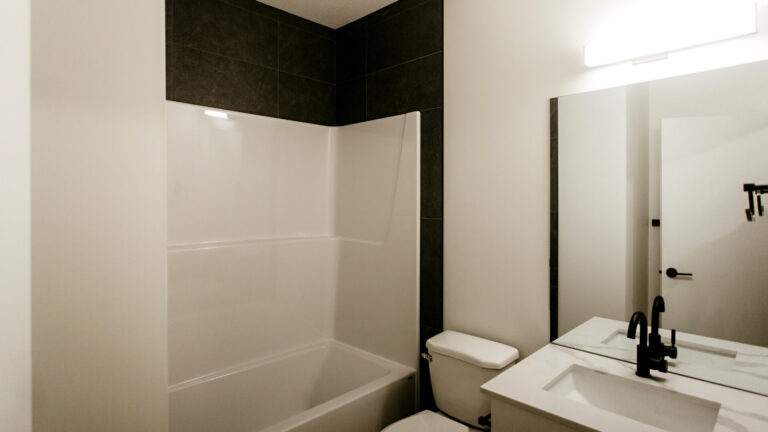
Surprisingly, the rental market has softened slightly due to a wave of new condo completions in downtown Kitchener and near the Universities.
- 1-Bedroom Apartment:$1,750 – $1,900/month.
- Kitchener: You can find older units for $1,650, while new builds like Station Park or TEK Tower command $1,950+.
- Waterloo: Expect to pay a premium ($1,900+) near the universities or Uptown.
- 2-Bedroom Apartment: $2,100 – $2,450/month.
- The Trend: Rents have decreased by roughly 2-4% year-over-year. The days of double-digit rent hikes seem to be behind us for now.
Buying in 2026
The market has cooled into a “Balanced Market,” meaning you actually have time to think before you offer.
- Detached Home:$840,000 – $880,000.
- You can still find detached starters in West Kitchener for $750k, while Eastbridge (Waterloo) or Hidden Valley will push $1.1M+.
- Condo Apartment:$370,000 – $440,000.
- This is the “sweet spot” for 2026. Condo prices have softened significantly, making this the most accessible entry point for first-time buyers.
- Townhouse: $570,000 – $650,000.
2. Utilities: Keeping the Lights On
KW has a complex utility web. Kitchener residents pay Kitchener Utilities (gas/water) and Kitchener-Wilmot Hydro, while Waterloo residents pay Waterloo North Hydro and Enova.
- Average Monthly Bill (2 People, 900 sq. ft. Apt):$200 – $250.
- Includes electricity, heating, cooling, water, and garbage.
- Internet:$80 – $110/month.
- Pro Tip: Independent providers like TekSavvy or Start.ca (using Rogers/Bell lines) can often get you reliable high-speed for $65/month.
- Property Tax: Both cities approved increases for 2026 (approx. 6.4%). If you own a median-priced home, expect to pay roughly $4,200 – $5,000/year in property taxes depending on the neighbourhood.
3. Getting Around: The ION & The Auto
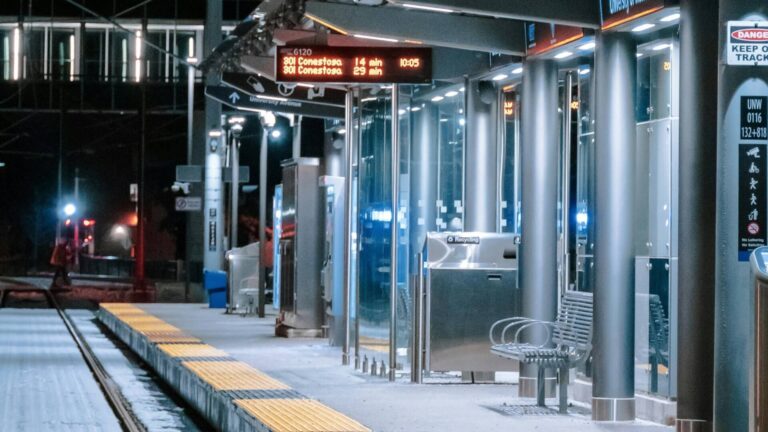
KW is becoming a transit-first city, especially along the Central Transit Corridor.
- Public Transit (GRT & ION Light Rail):
- Cash Fare: $4.00 (frozen for 2026).
- Monthly Pass: $104.00.
- Value: If you live and work near the ION line (Conestoga Mall to Fairview Park), you can legitimately live car-free, saving yourself $8,000+ per year.
- Driving:
- Gas: Hovering around $1.45 – $1.50/L.
- Car Insurance: Significantly cheaper than the GTA. An average driver with a clean record might pay $130 – $160/month, compared to $250+ in Brampton or Vaughan.
4. Food & Lifestyle: The “Inflation” Factor
This is where 2026 is still hurting. Food prices across Canada are up, and KW is no exception.
- Groceries: A family of four should budget $1,400 – $1,600/month.
- The “KW Hack”: Locals save massive amounts by shopping at the Kitchener Market (Saturday mornings) or the St. Jacobs Farmers’ Market (Thurs/Sat). Produce here is often 30-40% cheaper than Loblaws or Sobeys.
- Dining Out:
- Date Night (Mid-range, 3 courses): $100 – $120.
- Coffee: $5.50 – $6.50 for a latte at a local spot like Smile Tiger or Cafe Pyrus.
- Pint of Beer: $8.50 – $10.00 at a craft brewery.
5. Childcare: The $10/Day Promise
If you have young kids, this is the most critical line item.
- CWELCC Impact: By 2026, the Canada-Wide Early Learning and Child Care system has lowered fees significantly for participating centers.
- The Cost: Many families are now paying $20 – $25/day (down from $50+), aiming for the $10/day target.
- The Problem: Waitlists. While the cost is lower, finding a spot is harder than ever. You need to get on a waitlist the moment you are expecting.
2026 Snapshot: Monthly Budget for a Couple
| Category | Estimated Cost | Notes |
| Rent (1-Bed + Den) | $1,950 | Downtown Condo |
| Utilities/Internet | $300 | Hydro, Water, High-speed |
| Groceries | $700 | Mix of Market & Grocery Store |
| Transportation | $208 | 2 x Monthly GRT Passes |
| Entertainment | $300 | Dining out 4x, Netflix, etc. |
| Total | $3,458 | Excluding car/debt payments |
KW Cost of Living FAQs
Contact us to get our “2026 Budget & Neighbourhood Guide”—a customized breakdown of which KW neighbourhoods fit your monthly lifestyle budget.
Is Kitchener-Waterloo still cheaper than Toronto?
Yes. Rent in KW is roughly 45-50% lower than comparable neighbourhoods in downtown Toronto. Car insurance is also roughly 30% cheaper. While food and utility costs are similar, the massive savings on housing make KW significantly more affordable.
What salary do I need to live comfortably in KW
For a single person renting a decent apartment and owning a car, a pre-tax salary of $60,000 – $70,000 provides a comfortable life. For a family of four aiming to own a townhouse, a combined household income of $130,000+ is recommended to manage mortgage payments and lifestyle comfortably.
Which city has lower taxes: Kitchener or Waterloo?
Historically, Kitchener has slightly lower property tax rates than Waterloo. Waterloo’s rates are often impacted by the higher density of universities and associated services. However, the difference usually amounts to a few hundred dollars per year on an average home—not enough to be the sole deciding factor.
Is the condo market crashing in 2026?
It isn’t crashing, but it is “correcting.” Prices for condos have dropped ~7% year-over-year. This is actually good news if you are a buyer. It means you can buy a modern unit in downtown Kitchener for under $400k—something that was impossible in 2022.
Do I need a car in Kitchener-Waterloo?
If you live in Downtown Kitchener (DTK) or Uptown Waterloo, no. The ION Light Rail connects these hubs to malls, universities, and grocery stores. However, if you choose a suburban neighbourhood like Forest Heights or Laurelwood, a car is still highly recommended as bus routes can be infrequent on weekends.
Need to find a home that fits your 2026 budget?
We know which neighbourhoods offer the best value per square foot. Contact us to start your search today.